Sorry about the mess. Michalina Bigaj
Exhibition: 8 May – 28 June, 2026
Performance: 24 April, 2026, Batory Courtyard, 5:30 p.m.
What do we say when someone turns up unannounced? ‘Sorry about the mess.’ This sentence – seemingly trivial, usually uttered impulsively - serves as the starting point for Michalina Bigaj’s exhibition. Is it really just about unwashed dishes and things left lying about? And what if this ‘mess’ is something much bigger – a trace of our presence on Earth?
A Feast at Wawel Castle
The ‘Sorry about the mess. Michalina Bigaj’ exhibition stems from a project divided into two intertwined parts: a performance and an exhibition. The performance takes the form of a feast – a communal meal prepared using edible plants and mushrooms growing wild in the city. The ingredients gathered and preserved throughout the year raise questions about what we eat, where our knowledge of food comes from, and why so many flavours and culinary practices are falling into oblivion.
The artist Michalina Bigaj is interested in the phenomenon of culinary extinction – a silent process in which local plants, recipes, skills and our relationship with nature are disappearing.
‘Sorry about the mess’ is a visual story about the species we have eaten or are about to eat. It is a guide to edible, endangered species and a story about plants that can be our response to this crisis — that is, plants we never eat because we do not know them — wild varieties and cultivars that never make it to the stores, but instead grow in urban areas,’ explains the artist, who bases her concept on Lenore Newman’s studies into the phenomenon of culinary extinction.
The artist Michalina Bigaj is interested in the phenomenon of culinary extinction – a silent process in which local plants, recipes, skills and our relationship with nature are disappearing.
‘Sorry about the mess’ is a visual story about the species we have eaten or are about to eat. It is a guide to edible, endangered species and a story about plants that can be our response to this crisis — that is, plants we never eat because we do not know them — wild varieties and cultivars that never make it to the stores, but instead grow in urban areas,’ explains the artist, who bases her concept on Lenore Newman’s studies into the phenomenon of culinary extinction.
Culture of feasts in courts
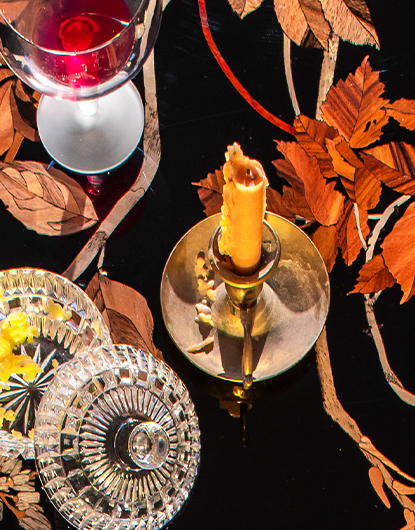
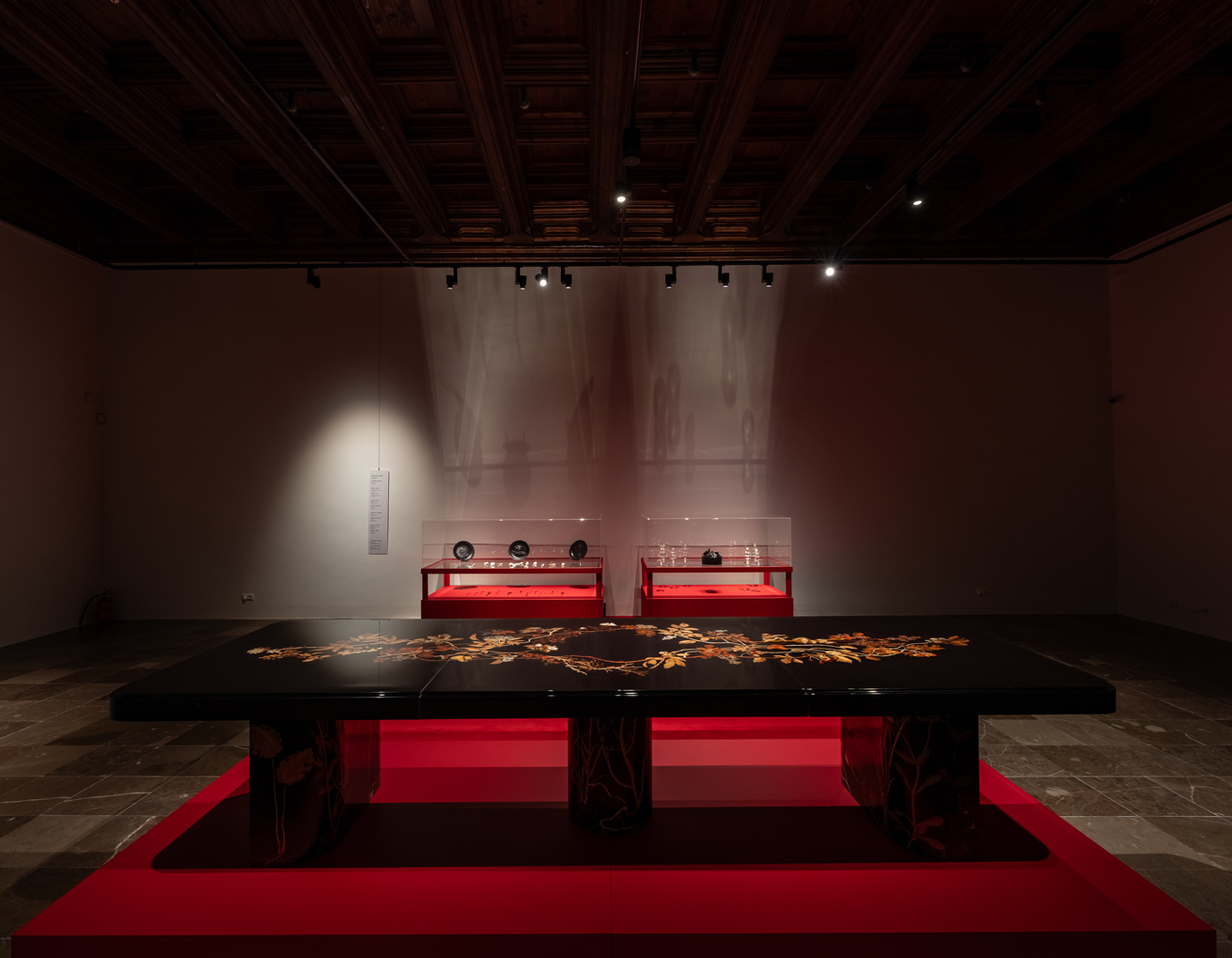
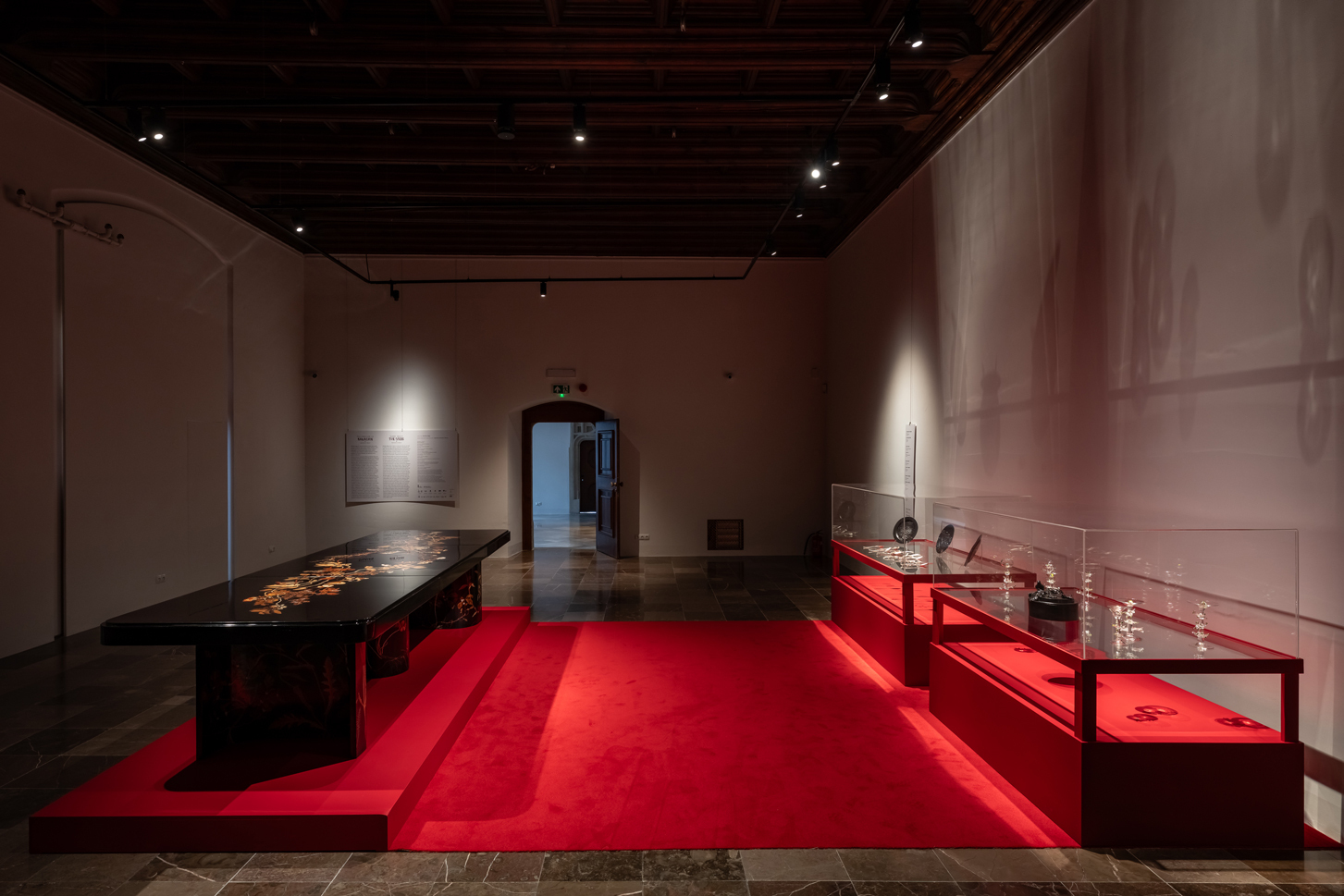
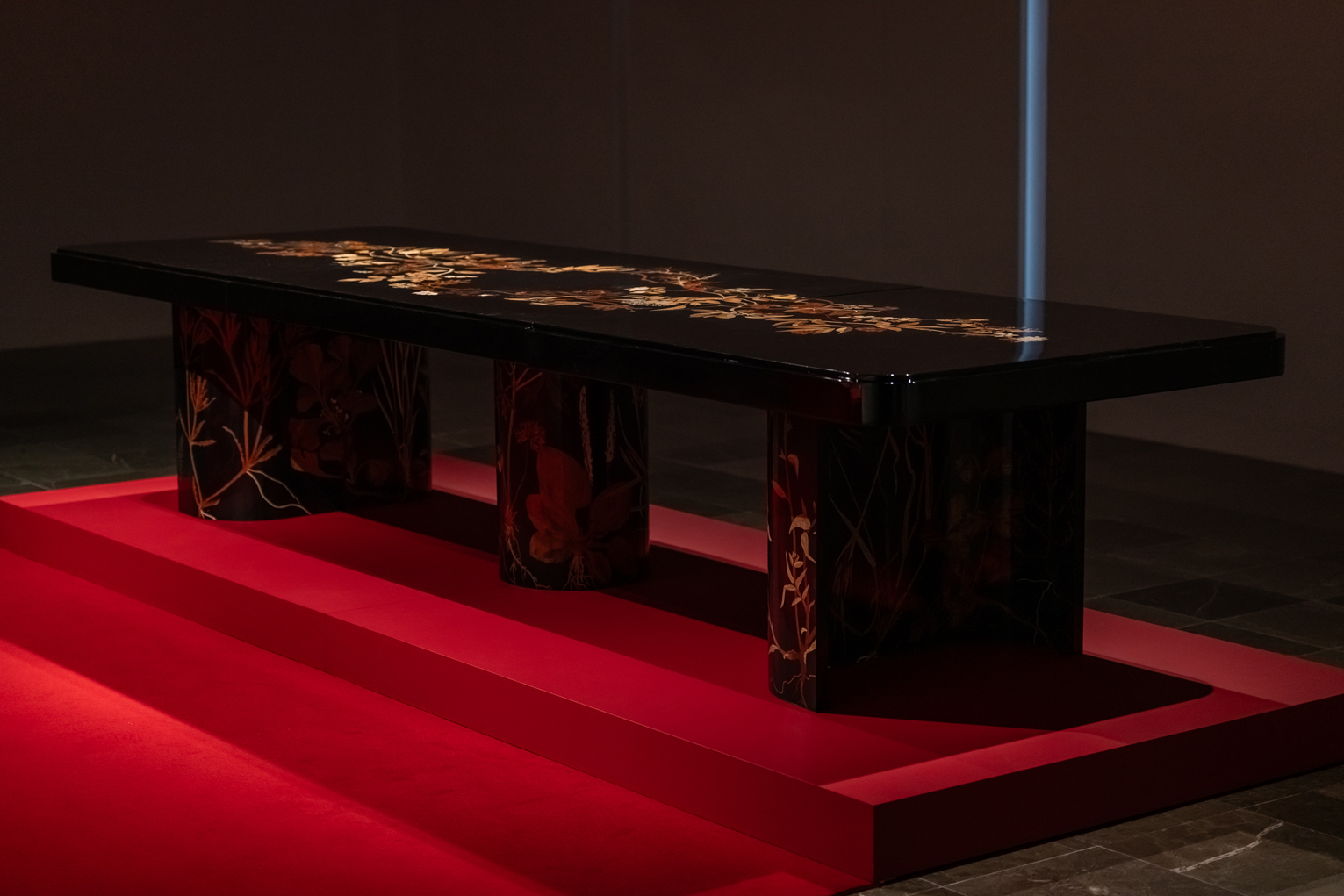
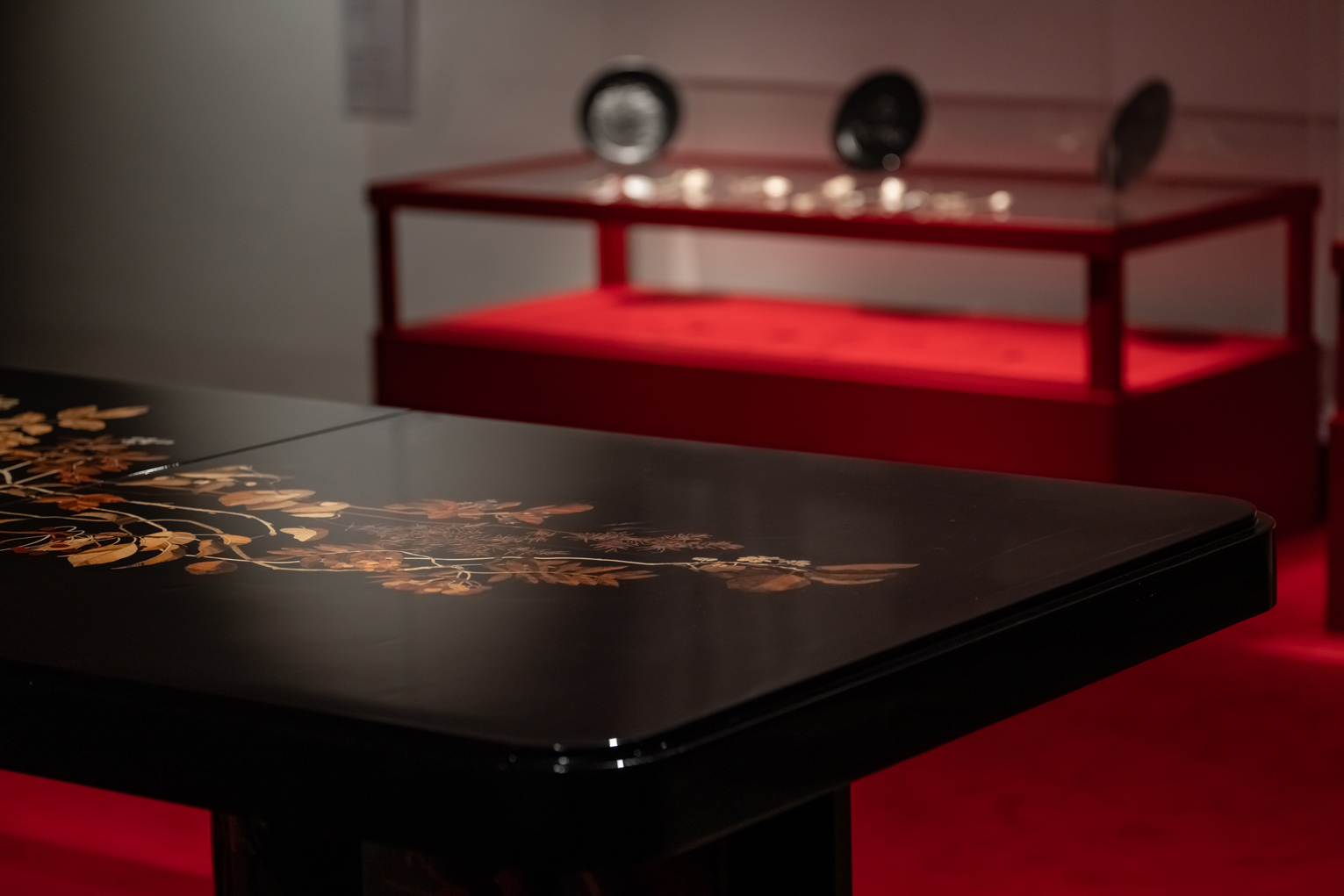
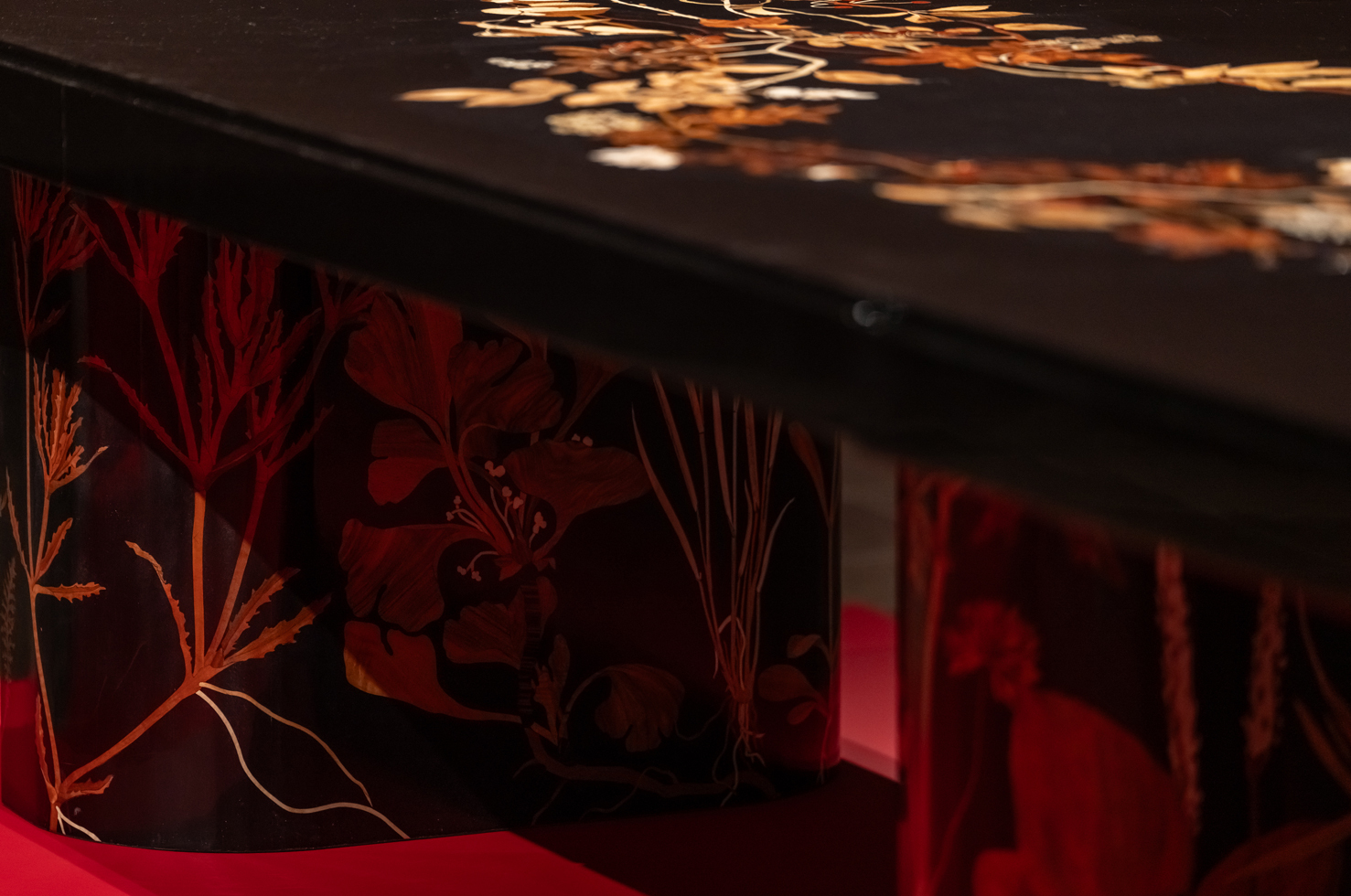
The centrepiece of the exhibition is an impressively large table. Designed and hand-made by Michalina Bigaj, it is intended to evoke associations with the courtly, opulent culture of feasts. However, it also reflects the craftsmanship of the old masters and their handiwork, which the artist uses not only to highlight the value of traditional techniques, but above all their impact on the more sustainable development of our world. The table was crafted using the marquetry technique ,incorporating over a dozen different types of wood. The tabletop and legs are decorated with an ornamental floral pattern, featuring edible wild plants. The table legs feature wild strawberries, yarrow, daisies, verbena, lamb’s lettuce, prickly saltwort, common glassword, broadleaf plantain, common purslane, wood sorrel, spiny water nymph, sweet grass, ramsons, American wintergreen, ginkgo, fawn lillies,, wild basil, shepherd’s purse and yellow star-of-Bethlehem. On the table top, one can find wild rose, cherry, sweet cherry, quince, gooseberry, blackberry, barberry, sea buckthorn, walnut, juniper, elderberry and mulberry.
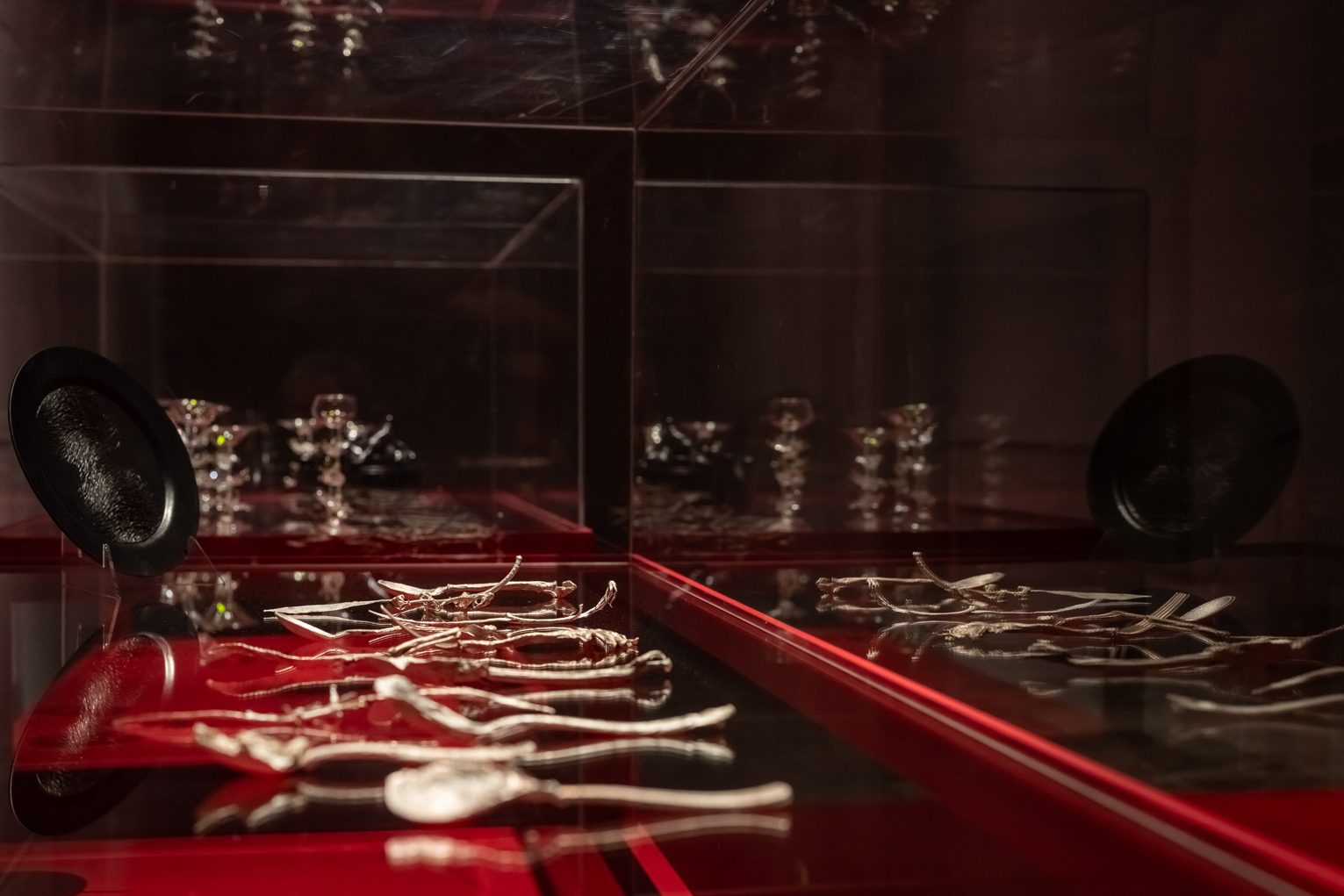
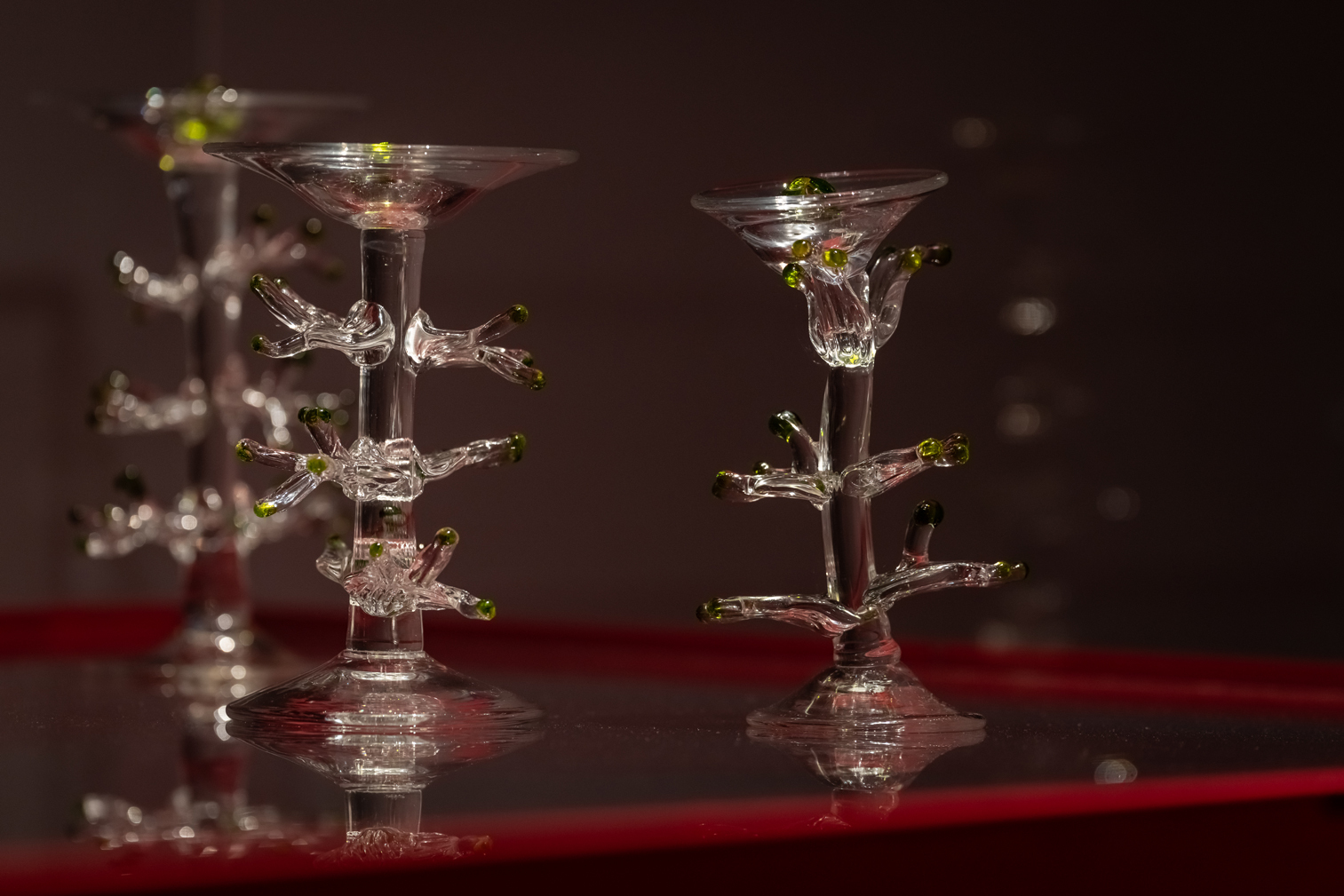
Michalina Bigaj’s environmental awareness is also evident in the materials she has used to create her cutlery - dried plants and food scraps, which have been given a refined, silver-plated finish through electroplating. The tableware and glasses, whose ornamentation and shape are reminiscent of Meissen porcelain, take on an unsettling appearance thanks to their black glaze. Michalina Bigaj’s exhibition highlights the potential inherent in the historical artefacts housed in Wawel Royal Castle, which continue to inspire stories that address the challenges of the modern world.
Michalina Bigaj’s environmental awareness is also evident in the materials she has used to create her cutlery - dried plants and food scraps, which have been given a refined, silver-plated finish through electroplating. The tableware and glasses, whose ornamentation and shape are reminiscent of Meissen porcelain, take on an unsettling appearance thanks to their black glaze. Michalina Bigaj’s exhibition highlights the potential inherent in the historical artefacts housed in Wawel Royal Castle, which continue to inspire stories that address the challenges of the modern world.
A visual account of the crisis
The objects created by the artist – used during the performance – subsequently become part of the exhibition. The exhibition is thus a record of the event, but also an invitation to personal reflection. What is left behind after sharing a meal? What traces of our presence would we consider worth preserving today? And are we still capable of saying ‘sorry’ – not just to our guests, but also to the world we helped shape?
The ‘Sorry about the mess. Michalina Bigaj’ temporary exhibition will be on display at Wawel Royal Castle until 28 June 2026. The historic interiors provide the backdrop for a contemporary reflection on food, memory and responsibility. The exhibition forms part of the Castle’s programme as a venue open to current social issues and artistic interpretations of history.
The ‘Sorry about the mess. Michalina Bigaj’ temporary exhibition will be on display at Wawel Royal Castle until 28 June 2026. The historic interiors provide the backdrop for a contemporary reflection on food, memory and responsibility. The exhibition forms part of the Castle’s programme as a venue open to current social issues and artistic interpretations of history.
About the artist

Michalina Bigaj (born in 1991) is a visual artist who lives and works in Kraków. She creates sculptures, installations, photographs and videos. Her work explores the relationship between humans and nature, focusing in particular on the growing imbalance between the human world and the products of human civilisation on the one hand, and natural resources on the other. In her work, she uses a variety of techniques, but she prefers creating three-dimensional objects.
Recently, she has become fascinated by the phenomenon of culinary extinction. Drawing on Lenore Newman’s research into this phenomenon, she metaphorically addresses the timeless issue of the disappearance of plant and animal species in her works. Human greed in the past and modern-day consumerism are causing natural resources to be slowly depleted. The furniture, tableware and other sculptural objects on display at the exhibition thus serve, on the one hand, as a visual representation of a refined and opulent courtly culture of feasts. On the other hand, they reveal the new potential of the historical artefacts housed in the Castle, enabling Michalina Bigaj to create contemporary narratives that address environmental issues.
Recently, she has become fascinated by the phenomenon of culinary extinction. Drawing on Lenore Newman’s research into this phenomenon, she metaphorically addresses the timeless issue of the disappearance of plant and animal species in her works. Human greed in the past and modern-day consumerism are causing natural resources to be slowly depleted. The furniture, tableware and other sculptural objects on display at the exhibition thus serve, on the one hand, as a visual representation of a refined and opulent courtly culture of feasts. On the other hand, they reveal the new potential of the historical artefacts housed in the Castle, enabling Michalina Bigaj to create contemporary narratives that address environmental issues.
About the Curator
Agnieszka Jankowska-Marzec
Art historian, curator, art critic. In 2007, she received her PhD title from the Institute of Ethnology and Cultural Anthropology of the Jagiellonian University. She is currently affiliated with the Faculty of Graphic Arts at the Academy of Fine Arts in Kraków. She also teaches a postgraduate course on the Art and Antiques Market at the Andrzej Frycz Modrzewski University in Kraków. Member of the editorial team of the Krakow Academy of Fine Arts’ RESTART quarterly (https://restartmag.art/) and of the Polish chapter of the International Association of Art Critics (AICA). Co-founder of the Pracownie do wglądu on-line project (https://pracowniedowgladu.pl/).
Performance | 24 April, 2026



Partners
 Hestia Artistic Journey Foundation and STU ERGO Hestia S.A.
 Funded by the Hestia Artistic Journey Foundation
 Main Partner of the Wawel Royal Castle
 Education Patron and Strategic Partner of the Wawel Royal Castle
 Strategic Partner of the Wawel Royal Castle
 Partner of the Wawel Royal Castle
 Partner of the Wawel Royal Castle
 Partner of the Wawel Royal Castle
Media Patrons